
The History of Manufacturing – Part 3: Luddism to Henry Ford

Ford assembly line 1913

Ford assembly line 1913Most of our prosperity and wealth is based on our ability to manufacture faster, better, and cheaper than ever before. To announce the publication of my first book Faster, Better, Cheaper” in the History of Manufacturing: From the Stone Age to Lean Manufacturing and Beyond here is the third of a four post series where  I would like to explore this story and tell you a brief version of the History of Manufacturing. In this third post I would like to talk about the social problems caused by the industrial revolution and its outburst of Luddism before moving on to the achievements of Henry Ford and his assembly line, but also how his firm was overtaken by GM.

Read more

The History of Manufacturing – Part 2: Middle Ages to Industrial Revolution

Medieval Blacksmith

Medieval BlacksmithMost of our prosperity and wealth is based on our ability to manufacture faster, better, and cheaper than ever before. To announce the publication of my first book Faster, Better, Cheaper” in the History of Manufacturing: From the Stone Age to Lean Manufacturing and Beyond here is the second of a four post series where  I would like to explore this story and tell you a brief version of the History of Manufacturing. In this second post I would like to explore how the middle ages prepared the industrial revolution and the appearance of the steam engine.

Read more

Using Lots of Effort and Money to Demotivate Your People

Negative Group

Business People Conflict Problem, Boss Team Working Throw Papers, Documents Fly Concept Negative Emotion, Businesspeople Desk Office Flat Vector IllustrationMotivation is a key aspect to success. This applies not only to individuals, but also to corporations. Since this is not really any new revelation, many companies put in quite a bit of effort into raising corporate morale. One popular morale booster is corporate events. It is difficult to make such events truly exceptional, but most companies manage to do at least a decent job. Others, however, produce just cringe-worthy results. Or, you could say they create a night to remember. Luckily for us, these are there for all to see on YouTube . Let’s have a look!

Read more

The Curious Case of 100% Work Performance

Poker of aces

Poker of acesEmployment is an exchange of work for money. In my last post I showed a few tricks on how operators keep management in the dark about the true workload. However, management is also not giving out all the details on their side either. Naturally, the true value of the work is difficult to assess. Even if companies could know exactly how much each employee contributes to the success, they probably would keep this information top secret.

More interesting, however, is the value of the target workload, where operators are able to work continuously at 130% capacity without problem. The following are my own thoughts, as I have never seen these conclusions anywhere else before.

Read more

How Operators Hide the True Workload

Poker cards and chips

Poker cards and chipsEmployment is an exchange of work for money. As with most negotiations, both sides would like to keep their cards hidden, so employers and employees use different tricks in an attempt to hide the true facts from the other.

This post looks at the tricks of employees, whereas the next post will look at those of employers. As employees have more control over the work than they do over the salary, this post shows how to keep management in the dark about the true workload.
Read more

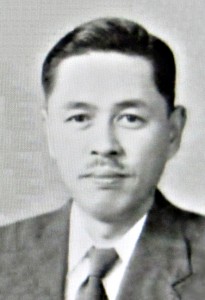
Twenty-five Years after Ohno – A Look Back

Taiichi Ohno
Taiichi Ohno
Taiichi Ohno, Father of the Toyota Production System

Twenty-five years ago today, on May 28, 1990, Taiichi Ohno passed away. While he was not the only person behind the Toyota Production System, he was its key driver and is considered the father of the Toyota Production System. To commemorate the anniversary, let’s have a look back at his life, and also at how lean changed after he passed away.

To produce only what is needed, when it is needed and in the amount needed. (Taiichi Ohno)

Read more

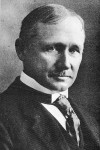
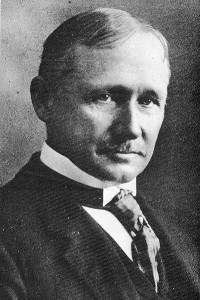
100th Anniversary of the Death of Frederick Winslow Taylor, the Father of Modern Scientific Management

Frederick Winslow Taylor

It was exactly 100 years ago today that Frederick Winslow Taylor died. He is considered the father of modern scientific management, the first management consultant, president of the ASME, and the first management guru. He invented and patented the first modern tool steel, designed new golf clubs, and optimized the growing of grass. He could swear like few others, but he also won the US Open tennis championships.

His work was already controversial when he died, but nobody doubts the enormous legacy he has left for industry. Without his achievements, there would be no modern manufacturing.

Read more

How a Little Bit of Industrial Espionage Started the Industrial Revolution

Top Secret

Top SecretThe Industrial Revolution changed the lives of ordinary people faster and more radically than any other period in history before it. Within only a few decades, small artisan shops were replaced by large factories. The Industrial Revolution started with the mass processing of cotton. Yet, as we will see, this happened only due to significant industrial espionage across multiple countries.

Read more

Cookie Consent with Real Cookie Banner