
 Work standards are a key component to continuous improvement. A standard is a tool that (if used correctly) prevents drifting away from a best-practice approach to do a task. Hence, I sometimes read that everything needs a standard. However, I don’t quite fully agree with this. Let me tell you when standards are helpful, and when maybe not.
Standard
The Limits of Work Standards
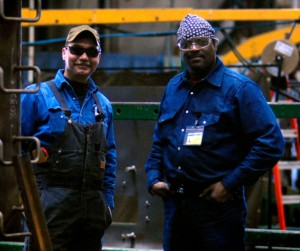 Work standards are the backbone of continuous improvement because you need a standard to maintain what you have already achieved. But standards are not easy. A standard should explain everything in sufficient detail without being too detailed…and that is a fine line to walk. The key to the problem, but also to the solution, is the worker who uses the standard. Let me show you.
Work Improvement before Equipment Improvement
 When improving a system, Western engineers love to take the technical approach and to optimize the machines and tools. However, at Toyota this is seen differently. At Toyota, they try to address a problem by first training the people, followed by improving the standards and the layout, before improving the equipment and finally twiddling with the design. Let’s have a closer look at how Toyota is approaching improvements.
Standards Part 9: Leader Standard Work
 Leader standard work. Sometimes also called standard work for leaders. A term that floats around quite a bit in lean manufacturing, but I always find it hard to make it more specific. The idea follows the lean concept to standardize things, and tries to standardize the work of managers or leaders. The idea itself is not bad, but it always feels like nailing Jell-O to a wall. There are definitely some worthwhile elements, but sometimes it appears almost mystical. Let’s have a look:
Standards Part 8: Example for a Work Standard
 In this series I have talked a lot about standards in general, work standards, standardized work. Let me now show you an example of a work standard, an actual instruction on how to do a work. Since standards in industry are usually confidential, I present you my own standard on how to make a cup of ramen noodles. I used a software tool Soft4Lean SWI to help me with the format; more on that later.
Standards Part 7: How to Write a Work Standard
 In my last post I talked about the different steps on how to do standard work. In this post I will go into more detail on how to write the actual work standard that is put up at the workplace. This will include quite a few examples in different styles, before I will go into a bit more detail for one example in my next post.
Standards Part 6: Standardized Work
Standard work, or better called standardized work, is a popular method in lean manufacturing. It is closely related to standards and hence part of this longer series on standards, but with a focus on manufacturing or assembly. The actual creation of the work standard is only one of the last steps, and a lot of time is put into balancing the production and matching the customer takt. I have written a lot about some of these aspects before, but let me give you an overview.
Standards Part 5: How to Use and Improve a Standard
 This post of this series on standards looks at how to use the standard correctly, and how to improve a standard. Hint: It is all about the people actually using the standard. This series is again getting longer than I thought, as there is much detail to be discussed. The next post will finally look more at standardized work.