
 When we are talking about lean manufacturing, we often focus on the tools like kanban, 5S, SMED, and many more. Sometimes, but harder to grasp, is the underlying culture and philosophy of continuous improvement and PDCA. Part of this culture is what you could call the soft power of the Toyota Production System. This is a form of decision making in contrast with the “hard power” more common in Western companies. Let’s have a look:
Toyota
Any posts related to companies from the Toyota Group, including Toyota Motor, Denso, etc., and its people.
Flexible Multi-Model Assembly Line at Toyota
 The flexible assembly line at Toyota is a well-known manufacturing approach. Such a flexibility gives Toyota the ability to produce different models in almost any sequence. These lines were already common at Toyota around 1990, and by now they are found at many car makers. Time to take a look at how it is done and why it is good.
The Difference between the Toyota Production System and Lean Manufacturing
 The Toyota Production System (TPS) is the archetype of lean manufacturing. Lean is often used as a synonym for the Toyota Production System, and that is generally quite accurate. It is also sometimes referred to as the “Westernized” version of the Toyota Production System. However, there are some smaller differences in the underlying approach, as well as some larger and often unintentional differences in its application. Let’s have a look!
On the Team Structure at Toyota
 Toyota is (among other things) famous for its team structure on the front line. They have a quite low ratio of team members to supervisors, and I believe that is part of their success. Whereas many Western companies overstuff their hierarchy, at Toyota supervisors actually have the time to help their people and to also improve the operations. Let me dig deeper into that. This blog post was inspired by the new book by Baudin and Netland, Introduction to Manufacturing.
Akio Toyoda Steps Down as Toyota CEO
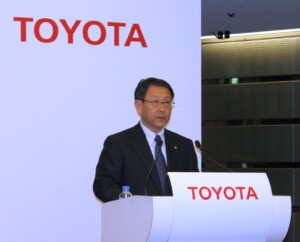 Somewhat surprising to industry insiders, the CEO of Toyota Motor, Akio Toyoda, announced on January 26 his resignation, and he will step down as CEO on April 1, 2023, to become the chairman of the board. Hence, I will have a look at his impact on Toyota. However, just to be warned, if you expect glowing praise, you should look elsewhere. I believe he changed Toyota, a company I love, in a worrisome way. I am definitely not a fan of his work. Granted, being a CEO is not easy, and he did have to lead Toyota through a couple of crises (Recall,s Corona, etc.). Compared to other CEO’s, he is probably somewhere around average. But I believe he had a negative influence on the Toyota corporate culture.
Toyota’s New Type of Flexible Assembly Lines—Takaoka Line #2
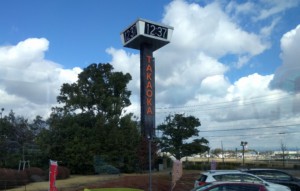 Flexible assembly lines are well known at Toyota – except that there are two types of “flexible assembly lines.” The well-known one is making multiple different models on the same line. But Toyota has developed a new type of flexible assembly line, where the entire layout of the assembly line can be changed quickly and easily. Confusingly, this is also called a flexible assembly line, although Toyota itself does not even have a name for it (different from the West, Toyota focuses more on doing something, while the West often puts the most effort into a catchy name). Their pilot line is in the Takaoka plant. Let me show you.
Toyota’s Master Craftsmen: Takumi

You may have heard of Takumi at Toyota. Takumi in general are highly skilled artisans that excel in their craft. Despite Toyota mass-producing cars using lots of machines, they also employ hundreds of Takumi. This blog post takes a deeper look at what a Takumi is, and why they are so important for Toyota and other Japanese companies.
Evolution of Process Placement at Toyota – Part 2
 Toyota did not start out as a lean company, but evolved over time. This was also not an automatic process. It needed a lot of care and attention, as well as continuous improvement and PDCA. This is the second post of this short, two-post series on the path of Toyota from a messy and hard-to-manage job shop to a much more efficient flow shop.